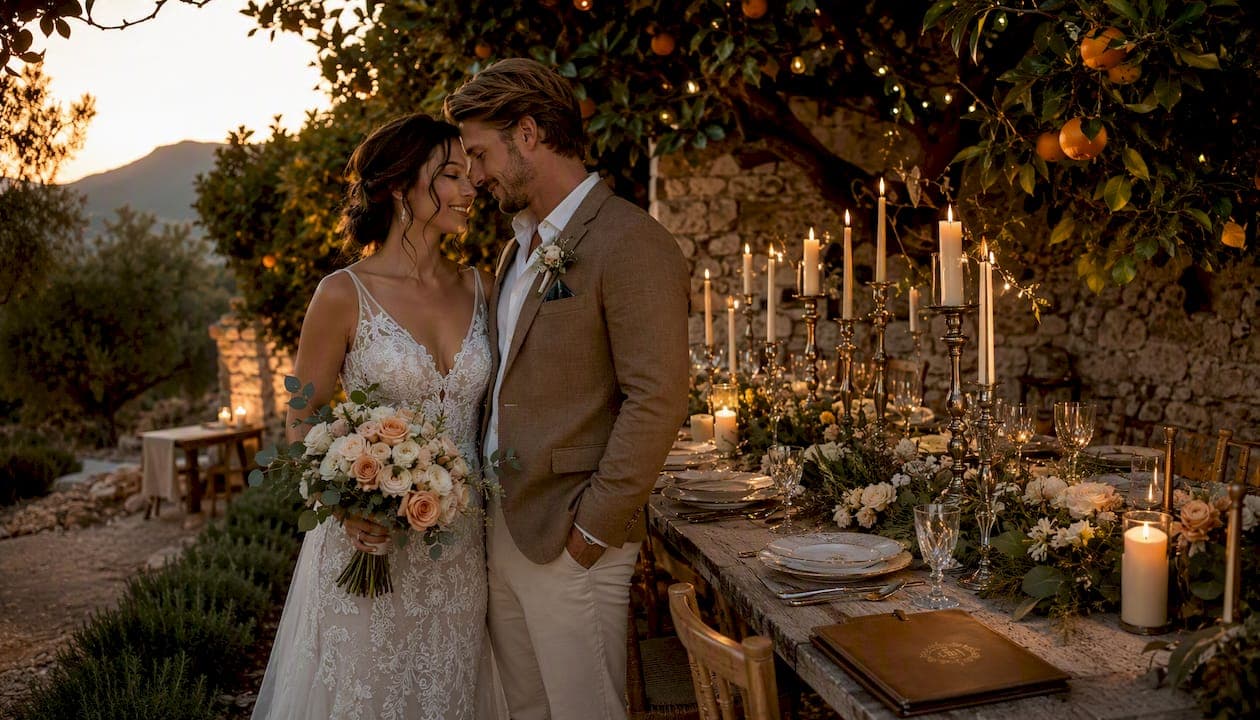
Choosing the right season is the single most important decision you will make for an outdoor wedding. Prioritise guest comfort first, photographic light second, and venue availability third. That order matters because no amount of beautiful décor compensates for guests who are overheated, shivering, or being bitten by midges.
Three things to sort this week:
- Check historical temperature averages and rainfall data for your specific venue location, not just the nearest city.
- Reserve an indoor room or marquee as a confirmed Plan B, not a vague fallback.
- Set your ceremony start time to avoid midday heat or low-light problems before you confirm anything else.
Once those three are locked in, every other seasonal decision becomes easier to sequence.
Table of Contents
- What are the seasonal outdoor wedding considerations for each season?
- Does your outdoor wedding have a reliable Plan B?
- How do you keep guests comfortable at different temperatures?
- When should you schedule your ceremony for the best light?
- How do you manage wind, décor and outdoor audio?
- What power, catering and sanitation do you need outdoors?
- What permits and noise rules apply to outdoor weddings?
- How does season affect your wedding budget and booking timeline?
- Your month-by-month planning timeline and day-of checklist
- How Dragonfly Dream Weddings plans seasonally in Andalusia
- Key takeaways
- The mistake most couples make with seasonal planning
- Three-day wedding weekends at Dragonfly Dream Weddings
- Useful sources
- FAQ
What are the seasonal outdoor wedding considerations for each season?
Central Europe offers four genuinely distinct seasons, and each one presents a different set of trade-offs for outdoor weddings. The key is knowing which risks are manageable and which are not.
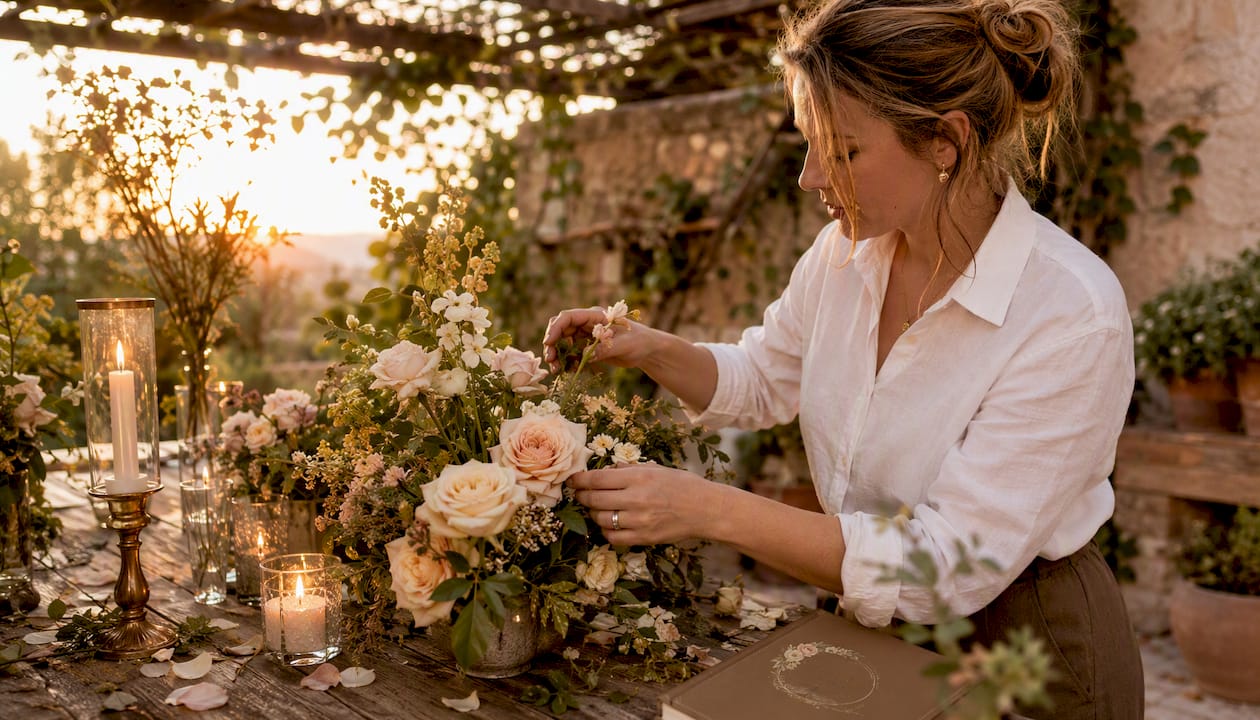
Spring (March to May)
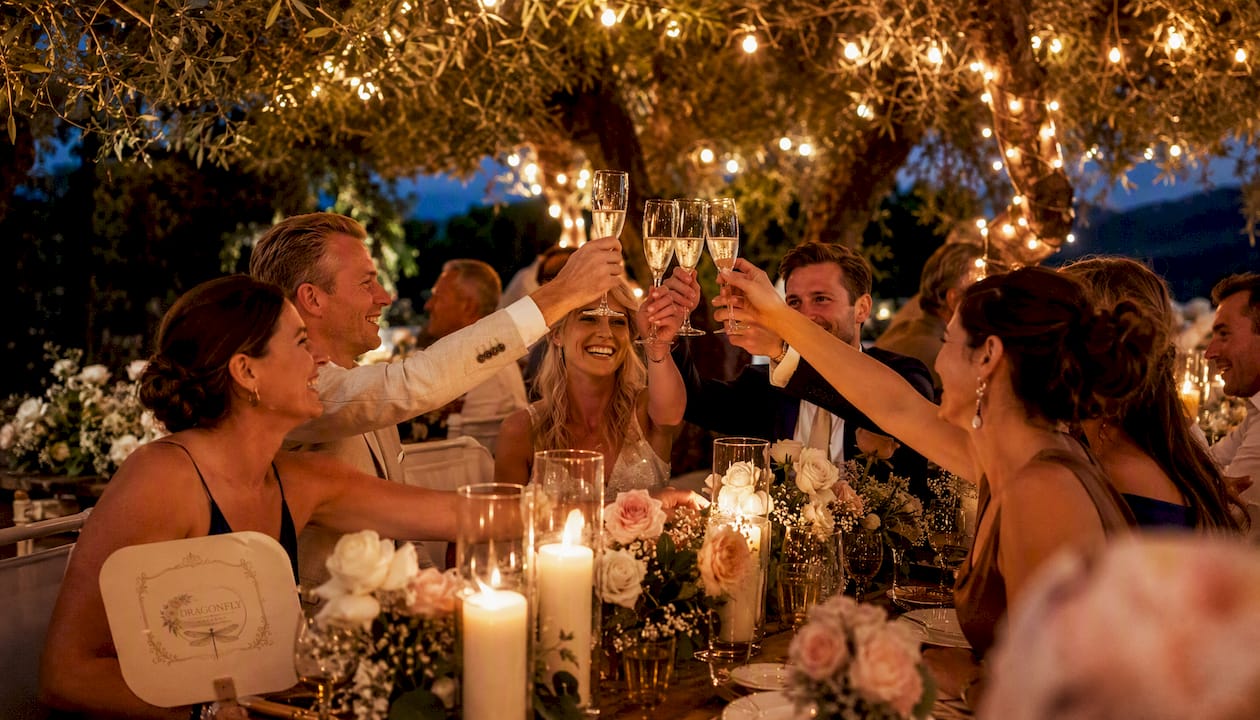
Spring is the most popular window for outdoor weddings in Central Europe, and for good reason. Temperatures are generally mild and comfortable for outdoor events, wildflowers are in bloom, and the light is clean and directional without being harsh. Availability tends to be high in March and April before the peak rush hits in May.
Pros:
- Mild temperatures ideal for guest comfort
- Lush, green backdrops and seasonal flowers (tulips, peonies, blossom)
- Long evenings from late April onwards
- Venue costs tend to be lower in early spring compared with peak summer
Cons:
- April showers are a genuine risk across Central Europe; a marquee or indoor fallback is non-negotiable
- Tick season begins in earnest from April; guests walking through grass need awareness
- May can book out 18 months in advance at popular venues
Summer (June to August)
Summer delivers the longest days and the most reliable dry weather across Central Europe. The risk is heat. Temperatures can become quite warm in midsummer months, especially inland areas, and a midday ceremony in full sun is genuinely uncomfortable for guests in formal dress.
Pros:
- Maximum daylight (golden hour can extend past 9:00 PM in June)
- Dry, predictable weather in most of Central Europe
- Guests can travel easily; school holidays suit families
Cons:
- Heat above 30–32°C requires active cooling measures
- Midges and mosquitoes peak in July and August
- Peak pricing and reduced vendor availability
- Thunderstorms can arrive quickly in late afternoon, particularly in inland and upland areas
Autumn (September to October)
Autumn is arguably the most underrated season for outdoor weddings. Autumn delivers softer golden light and often better venue availability and pricing than peak spring months. Temperatures in September often remain warm and suitable for outdoor ceremonies without excessive heat.
Pros:
- Rich, warm colour palette (amber, copper, deep green) for décor and photography
- Softer light and longer golden hour compared with summer
- Better venue and vendor availability than May or June
- Cooler evenings suit guests in formal attire
Cons:
- Rain probability increases from October onwards
- Daylight shortens noticeably; golden hour arrives earlier and lasts less time
- Some seasonal flowers are no longer available
Winter (November to February)
Winter outdoor weddings in Central Europe are genuinely challenging. Winter temperatures can be quite cold with shorter daylight and a higher chance of rain. That said, a winter ceremony with a heated marquee, candlelight, and a dramatic bare-tree backdrop can be striking for couples who plan meticulously.
Pros:
- Lowest venue costs and maximum vendor availability
- Dramatic, moody aesthetic with frost, bare branches and candlelight
- Intimate guest lists feel natural in the season
Cons:
- Sub-10°C temperatures require significant heating infrastructure
- Short days mean golden hour arrives before 4:30 PM
- Rain, frost, and ice create accessibility and safety risks
- Guests need clear guidance on attire and travel conditions
Regional microclimate table
Local microclimates can shift conditions by 5–10°C between a coastal site and an inland venue just 30 minutes away. The same principle applies across Central Europe.
| Location type | Summer temp range | Rain risk (spring/autumn) | Key consideration |
|---|---|---|---|
| Coastal | 20–25°C | Low to moderate | Sea breezes help; humidity can affect hair and florals |
| Inland plains | 30–32°C | Moderate | Heat management is the priority in July–August |
| Upland / hills | — | Moderate to high | Afternoon thunderstorms; wind more significant |
| River valleys | 20–30°C | Moderate | Mist in mornings; beautiful autumn light |
Pro Tip: The shoulder months of late April, May, and September offer the best combination of comfortable temperatures, good light, and reasonable vendor availability. If you can be flexible on your date, these windows are worth prioritising.
Does your outdoor wedding have a reliable Plan B?
A Plan B is only useful if it is confirmed in writing before the wedding day. A vague "we can move inside if needed" conversation with a venue manager is not a contingency plan.
What counts as a robust Plan B
- A dedicated indoor room at the venue with enough capacity for your full guest list
- A fully lined and sided marquee with flooring, lighting, and power already connected
- A quick-erect canopy system for ceremonies of under 50 guests where a full marquee is impractical
- A clear trigger point (e.g., rain forecast above 60% probability at 48 hours) that activates the Plan B automatically
Professional guidance consistently recommends securing venues that offer dedicated indoor event spaces rather than relying on hired structures alone. An indoor fallback that is already part of the venue requires no additional logistics on the day.
Insurance checklist
- Wedding insurance covering weather-related postponement or cancellation
- Public liability cover for the venue and any hired structures
- Supplier failure cover (caterer, photographer, band)
- Proof of cover from every external vendor before the wedding day
- Check policy exclusions carefully: most policies exclude "adverse weather" that does not meet a specific threshold (e.g., a named storm or a government travel warning)
Contract questions to ask vendors and venues
- Does the force majeure clause cover extreme heat or heavy rain, or only named storms?
- What is the set-up time allowance, and does it change if the Plan B is activated?
- What are the rebooking terms if the event must be postponed within 72 hours?
- Is there a cancellation fee if the outdoor space cannot be used and the indoor alternative is materially different?
- Who is responsible for the cost of a hired marquee if it is damaged by wind?
How do you keep guests comfortable at different temperatures?
Comfort thresholds for outdoor events suggest moderate temperatures are ideal, with active cooling or heating needed outside of that range. Guidance commonly cites 18–26°C as ideal; above 30–32°C needs active cooling, and below 10°C requires significant heating and heavier attire.
Guest comfort checklist
- Shade structures (parasols, sail shades, or a covered terrace) positioned over seating areas
- Hydration stations with cold water, cordials, and electrolyte drinks available from arrival
- Accessible, level routes between ceremony, reception, and toilet facilities
- Seating for all guests during the ceremony, not just the front rows
- A shaded or cool indoor rest area for elderly guests and young children
- Dietary and allergy information confirmed with caterers in advance
- Insect repellent available at the venue (discreetly placed near exits)
Pest management by season
- Spring: Ticks are active from April in grassy and wooded areas. Ask guests to check clothing after walking through grass; provide a tick-removal kit in the first-aid box.
- Summer: Midges and mosquitoes peak in July and August, particularly near water and at dusk. Citronella candles, plug-in repellents, and DEET-based sprays for guests are all practical measures.
- Autumn: Wasps are more aggressive in September as food sources decline. Keep food covered and avoid sweet-scented floral arrangements near dining areas.
- Winter: Pest pressure is low, but damp conditions can attract slugs and snails onto pathways; check outdoor routes before guests arrive.
Pro Tip: When the photographic ideal (full sun, open field) conflicts with guest comfort (shade, shelter), choose guest comfort every time. A well-lit portrait in dappled shade is far better than a technically perfect shot taken while your guests are quietly suffering.
When should you schedule your ceremony for the best light?
The single most common scheduling mistake is placing the ceremony at 2:00 PM because it "feels right." In summer, midday light between roughly 12:00 and 17:00 produces harsh shadows that are unflattering in photographs and uncomfortable for guests facing the sun.
Recommended ceremony windows by season
- Spring (March to May): 3:00 PM to 5:00 PM. Golden hour arrives around 7:00–8:30 PM, giving a comfortable buffer for portraits after the ceremony.
- Summer (June to August): 5:00 PM to 7:00 PM. In hot regions, experienced destination planners start ceremonies no earlier than 7:00–7:30 PM to avoid peak heat and capture the best evening light.
- Autumn (September to October): 2:00 PM to 4:00 PM. Golden hour arrives earlier (around 6:00–7:00 PM) and is shorter, so the ceremony-to-portraits gap needs careful scheduling.
- Winter (November to February): 12:00 PM to 1:00 PM. Daylight is limited; a midday ceremony maximises usable light and allows portraits before the sun drops.
How daylight duration affects your schedule
Golden hour in spring and summer can run from 7:00 PM to 9:30 PM in southern locations; in late autumn it may last only from 5:30 PM to 6:30 PM. That difference of up to two hours changes everything: dinner timing, the first dance, and when the band can start.
Build a sunset buffer of at least 30 minutes into your timeline. If portraits are scheduled to begin at 7:00 PM and sunset is at 7:45 PM, you have a workable window. If the ceremony runs 20 minutes over, that window disappears.
Pro Tip: Ask your photographer for a date-specific schedule, not a generic "golden hour slot." The exact timing of usable light shifts week by week through the year, and a photographer who plans around the actual sunset time for your date will protect your portrait time far more reliably than one working from a fixed formula.
How do you manage wind, décor and outdoor audio?
Wind is the most underestimated outdoor wedding risk. A 25 km/h breeze feels pleasant on a warm day but will topple an unsecured arch, scatter table settings, and make a microphone unusable.
Windproof décor choices
- Use low, weighted centrepieces rather than tall vases; flat floral arrangements on tables are more stable than towering displays
- Secure ceremony arches with ground stakes and cable ties, not just gravity
- Weight all signage boards with sandbags or fix them to freestanding frames with clamps
- Choose candles in hurricane lanterns or enclosed holders rather than open flames
- Use linen clips or decorative weights on tablecloths; never rely on the weight of crockery alone
Audio checklist for outdoor ceremonies
- Use a directional cardioid microphone for the officiant; lapel microphones for the couple
- Position speakers to face the audience, not the open sky
- Test the system at the same time of day as the ceremony to account for ambient noise changes
- Arrange a backup power source (battery pack or generator) for the PA system
- Confirm the audio engineer has a windshield (deadcat) for all exposed microphones
- Brief the officiant on microphone technique; untrained speakers drift away from the mic
On the day, check the forecast for wind speed and direction at your venue. A wind of 40 km/h or above warrants moving the ceremony to a sheltered position or activating the indoor Plan B.
What power, catering and sanitation do you need outdoors?
Outdoor receptions require infrastructure that a permanent venue building provides automatically. Planning this early prevents expensive last-minute hires.
| Requirement | Outdoor solution | Key consideration |
|---|---|---|
| Refrigeration | Refrigerated trailer or cool boxes with ice | Food safety: cold chain must be maintained below 5°C |
| Kitchen prep | Mobile catering unit or covered prep tent | Requires power and water connection |
| Lighting | Generator-powered LED string lights or solar | Silent generator essential near dining areas |
| Toilet facilities | Luxury toilet trailer (1 unit per 50 guests) | Accessible unit required for wheelchair users |
| Handwashing | Standalone handwashing station with soap | Positioned between toilets and dining area |
| Power for band/PA | Dedicated generator circuit | Separate from catering power to avoid surges |
Power and generator checklist
- Calculate total load (catering, lighting, PA, heating/cooling) before specifying generator size
- Book a silent or super-silent generator; standard diesel units are too loud near dining areas
- Arrange fuel delivery for events running longer than six hours
- Position the generator at least 10 metres from guest areas to reduce noise and exhaust fumes
- Test the generator under load during the venue set-up, not on the morning of the wedding
Food safety outdoors requires covered serving stations, timed food service windows (hot food out for no longer than two hours), and a clear protocol for removing dishes promptly. In temperatures above 25°C, cold dishes should be served from chilled platters or ice beds.
What permits and noise rules apply to outdoor weddings?
Local municipalities across Central Europe issue permits for amplified sound, fireworks, and use of public land. The rules vary significantly between countries, regions, and even individual municipalities, so checking early is the only reliable approach.
Permits checklist
- Outdoor ceremony on private land: Confirm the venue holds the appropriate licence for civil or religious ceremonies outdoors; this is a venue responsibility but couples should verify it.
- Amplified sound: Most municipalities require a noise permit for amplified music above a set decibel level; apply at least eight weeks in advance.
- Late-night music: Many Central European municipalities enforce noise curfews between 10:00 PM and midnight; confirm the exact curfew for your venue's postcode.
- Fireworks or sky lanterns: Require a separate permit in most jurisdictions; some municipalities ban them entirely near agricultural land.
- Public land use: If any part of the event (arrival, photographs, transport) uses a public road or park, a separate permit from the local authority is required.
How to find the right guidance
- Ask your venue coordinator for copies of all existing licences and any conditions attached to them
- Contact the local municipality (Gemeinde, Obec, or equivalent) directly for sound and fireworks permits
- Request written confirmation of noise curfew times; verbal assurances from venue staff are not sufficient
- Build a curfew-friendly music plan: acoustic sets or a playlist after the curfew time, with the band finishing 30 minutes before the limit to allow for overruns
How does season affect your wedding budget and booking timeline?
Season affects cost in two ways: venue pricing and the availability of preferred suppliers. Peak months command premium rates; shoulder months offer the same quality for less.
Booking lead-time table
| Supplier | Peak season (May, June, September) | Shoulder season (April, October) | Off-peak (Nov–March) |
|---|---|---|---|
| Venue | 18–24 months | 12–18 months | 6–12 months |
| Photographer | 12–18 months | 9–12 months | 6–9 months |
| Caterer | 12 months | 9 months | 6 months |
| Marquee hire | 12 months | 6–9 months | 3–6 months |
| Band or DJ | 12–18 months | 9–12 months | 6 months |
Budget items that vary most by season
- Venue hire premium: Peak months (May, June, September) typically carry the highest rates; March, April, and October offer the same spaces at lower cost.
- Cooling and heating rentals: Misting fans, portable air conditioning, and patio heaters add cost in summer and winter respectively; shoulder months often need neither.
- Marquee hire: Demand peaks in May and June; booking in autumn for the following year secures better pricing and priority scheduling.
- Guest travel: Summer flights and accommodation cost more across Central Europe; a September or October date can reduce guest travel costs noticeably.
- Florals: Seasonal flowers cost less when they are naturally in supply; forcing out-of-season blooms adds to the florist's bill.
A shoulder-season booking in late April or October can reduce overall costs while delivering better vendor availability and, often, superior photographic light.
Your month-by-month planning timeline and day-of checklist
12 months before
- Confirm your season and set a date range based on temperature averages and daylight data for your venue location.
- Book the venue and confirm the indoor Plan B in writing.
- Book your photographer and share your provisional ceremony time window.
- Research marquee hire companies if the venue does not have a permanent indoor alternative.
9 months before
- Book your caterer and discuss outdoor food safety requirements.
- Confirm your florist and agree on seasonal flower choices that are naturally available in your chosen month.
- Book the band or DJ and check noise curfew times with the venue.
- Begin the permits process for amplified sound and any fireworks.
6 months before
- Book transport and confirm parking arrangements; check whether seasonal weather (mud, ice, flooding) affects the access route.
- Arrange wedding insurance covering weather-related postponement.
- Send save-the-dates with seasonal attire guidance for guests (e.g., "light layers for a warm September evening").
3 months before
- Confirm generator and power hire if needed.
- Book toilet trailer and handwashing stations.
- Finalise the day-of timeline with your photographer, building in a sunset buffer.
6 weeks before
- Check seasonal pest risks and arrange citronella candles, tick kits, or wasp deterrents as appropriate.
- Confirm all vendor contracts include force majeure and rebooking clauses.
- Share a weather contingency plan with your venue coordinator in writing.
Day-of checklist
- Check a 48-hour and 24-hour weather forecast from a reliable source (MeteoBlue or the national meteorological service for your country)
- Confirm Plan B activation threshold with the venue coordinator first thing in the morning
- Brief the audio engineer on wind conditions and microphone placement
- Set up hydration stations and shade structures before guests arrive
- Distribute insect repellent and hand fans to ushers for guest distribution
- Confirm the generator is running and tested under load
- Walk the accessible route from parking to ceremony space and remove any hazards
Wedding-weather emergency kit
- Clip-on tablecloth weights and cable ties for décor
- Sandbags for signage and arch bases
- Hand fans (one per guest for summer weddings)
- Portable patio heaters or heat lamps (shoulder season and winter)
- Insect repellent (DEET-based and citronella)
- Spare umbrellas (at least one per ten guests)
- Waterproof covers for the DJ or band equipment
How Dragonfly Dream Weddings plans seasonally in Andalusia
Southern Spain operates on a different seasonal calendar from Central Europe, and understanding that difference is useful for any couple considering a destination wedding. Rain in Andalucía is concentrated between October and March, which means the spring and autumn windows that carry weather risk in Central Europe are often the most reliable months in Málaga.
Dragonfly Dream Weddings, set in the Andalusian countryside near Coin, Málaga, 35 minutes from Málaga Airport, plans every wedding around these seasonal realities. The venue's Mediterranean gardens and the iconic Rose Pool are at their most photogenic in late spring and early autumn, when temperatures are comfortable and the light is warm without being punishing.
For summer weddings, the team schedules ceremonies from 7:00 PM onwards to avoid the heat of the afternoon. The gardens provide natural shade, and the venue's indoor spaces offer a cool retreat for guests between the ceremony and the reception. For shoulder-season evenings in October or April, outdoor heating is arranged as standard, so guests in evening dress remain comfortable as the temperature drops after sunset.
Key seasonal features at Dragonfly Dream Weddings:
- Boutique on-site accommodation for up to 20 guests, with additional accommodation nearby for groups of up to 100
- Dragonfly Hall as a confirmed indoor fallback for any outdoor ceremony or reception
- Mediterranean gardens and the Rose Pool as primary outdoor spaces, with natural shade from mature trees
- In-house wedding coordinator managing seasonal logistics from the first enquiry through to the farewell brunch
- Three-day wedding weekends that give guests time to acclimatise to the climate before the main event
Explore the venue and seasonal packages to see how the three-day format works in practice.
Key takeaways
Choosing your season based on guest comfort, photographic light, and venue availability, then locking in a confirmed Plan B, is the foundation of a well-planned outdoor wedding.
| Point | Details |
|---|---|
| Ideal temperature range | 18–26°C is the comfortable outdoor range; above 30–32°C needs active cooling, below 10°C needs significant heating. |
| Shoulder seasons win | Late April, May, and September offer the best balance of weather, light, vendor availability, and cost. |
| Plan B must be confirmed | An indoor room or sided marquee must be booked in writing, with a clear trigger point for activation. |
| Ceremony timing matters | Avoid 12:00–17:00 in summer; schedule ceremonies in the two hours before sunset for comfort and photography. |
| Dragonfly Dream Weddings | Offers confirmed indoor fallback, in-house seasonal planning, and a three-day format that gives guests time to acclimatise. |
The mistake most couples make with seasonal planning
The most common error is treating the season as a backdrop rather than a logistical variable. Couples spend months choosing florals and table linen, then book a 2:00 PM ceremony in July because it fits the catering schedule, without ever checking what 35°C feels like in formal dress on an exposed terrace.
Seasonal planning is not about aesthetics. It is about the sequence of decisions: date first, then ceremony time, then contingency, then everything else. The décor follows from those choices; it does not precede them.
The second error is assuming that a venue's reassurance ("we do this all the time") replaces a written contingency plan. It does not. A venue that has hosted a hundred summer weddings has also seen a hundred couples discover that "we can move inside" means something different to the venue than it does to the couple.
At Dragonfly Dream Weddings, the in-house coordinator works through a seasonal checklist with every couple from the first planning call, covering ceremony timing, Plan B logistics, and guest comfort measures before any supplier is booked. That sequence protects the day in a way that no amount of beautiful décor can.
Three-day wedding weekends at Dragonfly Dream Weddings
Planning an outdoor wedding in Southern Spain means working with one of the most forgiving climates in Europe, and Dragonfly Dream Weddings is built around that advantage. The venue's exclusive-use model means your wedding party has the entire property, from the Rose Pool to the Mediterranean gardens, for the full three days. No other events, no shared spaces, no compromises on timing.
The in-house coordinator handles every seasonal logistics decision: ceremony timing, heating or cooling arrangements, sound permits, and the indoor fallback in Dragonfly Hall. For couples travelling from the UK or Ireland, the three-day format removes the pressure of a single-day event and gives guests the time to settle into the Andalusian pace before the ceremony itself.
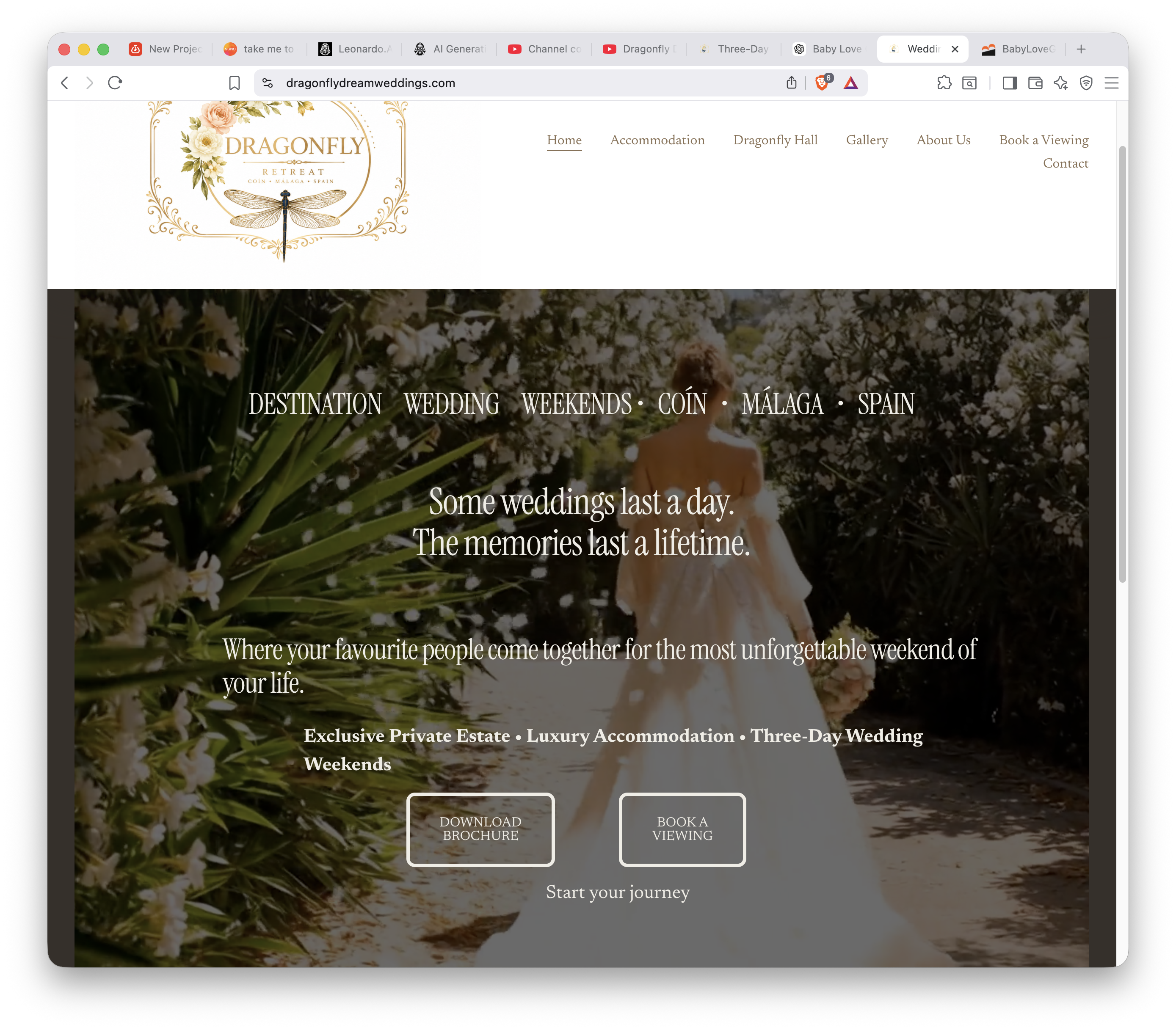
Accommodation for up to 20 guests on-site, with additional options nearby for groups of up to 100, means the whole celebration stays together in one place. The full venue and package details are available to browse, or you can book a private viewing to see the gardens and spaces in person before committing to a date.
Useful sources
Weather data and permit guidance change regularly; always verify with the primary source for your venue's location.
- Andalucía 365 weather and climate guide: monthly temperature and rainfall data for Andalusia, including coastal vs inland comparisons
- Longtake Film destination wedding Spain guide: practical timing and seasonal advice for southern Spain weddings
- That's Amore Andalusian gardens wedding guide: seasonal availability, golden hour timing, and venue contingency guidance
- Mill End Hotel outdoor wedding licensing guide: explains venue licensing requirements for outdoor ceremonies
- Mobile Thrones outdoor wedding comfort guide: temperature thresholds and practical comfort measures
- Dragonfly Dream Weddings venue and packages: full details of three-day wedding weekends in Andalusia
| Source type | Where to find it | What to check |
|---|---|---|
| Weather forecasts | MeteoBlue, national meteorological services | 14-day and hourly forecasts for your venue postcode |
| Municipal permits | Local Gemeinde, Obec, or Ayuntamiento website | Noise curfew times, fireworks rules, public land use |
| Venue licensing | Your venue coordinator | Outdoor ceremony licence, public liability, force majeure terms |
| Wedding insurance | Specialist brokers (Dreamsaver, Wedinsure) | Weather postponement cover, supplier failure, liability |
When the permit rules for your specific municipality are unclear, a local wedding planner with experience in that area will resolve the question faster than any online search.
FAQ
What temperature is too hot for an outdoor wedding?
Above 30–32°C, guests in formal dress will be uncomfortable without active cooling measures such as shade, misting fans, and cold water stations. Inland venues in Central Europe and southern Spain can exceed 40°C in July and August, making a late-evening ceremony start (after 7:00 PM) the most practical solution.
What is the best time of year for an outdoor wedding in Central Europe?
Late April, May, and September offer the most reliable combination of comfortable temperatures, good photographic light, and reasonable vendor availability. These shoulder months avoid the peak heat of summer and the rain risk of early spring and late autumn.
Do you need a permit for an outdoor wedding ceremony?
In most Central European countries, the venue must hold a licence for outdoor civil ceremonies, and a separate permit is typically required for amplified sound above a set decibel level. Fireworks require an additional permit in most jurisdictions. Check with your local municipality at least eight weeks before the event.
What is the rarest month to get married?
January is consistently the least popular month for weddings across Central Europe and the UK, followed by February. Both months carry the highest weather risk for outdoor events and the shortest daylight hours, though they offer the lowest venue costs and maximum vendor availability.
How does Dragonfly Dream Weddings handle seasonal planning?
Dragonfly Dream Weddings schedules summer ceremonies from 7:00 PM onwards to avoid peak heat, provides natural shade in the Mediterranean gardens, and offers Dragonfly Hall as a confirmed indoor fallback. The in-house coordinator works through a seasonal checklist with every couple before any supplier is booked.