Spain is the most venue-diverse wedding destination in the Mediterranean, offering everything from whitewashed Andalusian fincas to glass-fronted Barcelona rooftops. The types of wedding venues in Spain span five distinct categories, each with its own aesthetic, price point, and logistical profile. Whether you are planning an intimate 50-person celebration or a grand 200-guest affair, Spain's regions, from Andalusia to the Balearic Islands to Catalonia, deliver settings that no other European country can match. Wedding budgets in Spain typically fall into classic tiers of €30,000 to €40,000 for 50 to 100 guests, and luxury tiers exceeding €50,000 for 100 to 250 guests. That range reflects the sheer variety of what is available.
1. Types of wedding venues in Spain: rustic fincas and cortijos
A finca is a rural estate, and a cortijo is its Andalusian cousin, traditionally a working farmhouse surrounded by olive groves, citrus trees, and whitewashed walls. These are the most requested venue style in southern Spain, and for good reason. They deliver the romantic, sun-drenched countryside aesthetic that most couples picture when they imagine a Spanish wedding.
Fincas and cortijos suit medium-sized weddings well, typically between 80 and 150 guests. They offer natural backdrops that require little decoration, and their sprawling grounds allow for ceremony, cocktail hour, and reception in three distinct outdoor spaces. Exclusive Andalusian cortijos often provide multi-day packages with accommodation for 22 to 50 guests on-site, with pricing starting around €25,000 for 120 guests including catering.
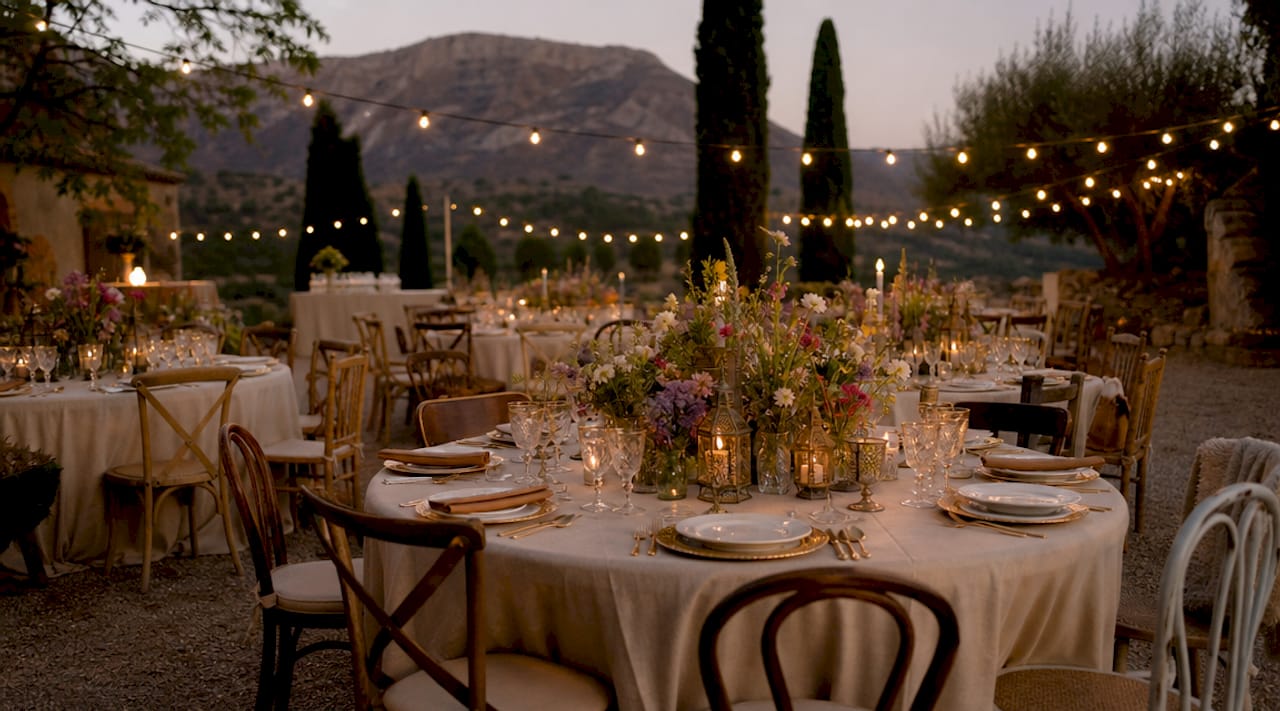
The logistical reality deserves attention. Fincas were originally agricultural estates and require temporary infrastructure like quiet generators and satellite catering tents to function as wedding venues. Noise ordinances in rural Andalusia are strict, so you will need silent power sources and soundproofed areas to keep the celebration running past midnight. A good local planner handles all of this without you ever seeing the complexity.
Key features of finca and cortijo venues:
- Whitewashed architecture with terracotta tiles and bougainvillea
- Outdoor ceremony spaces under olive trees or pergolas
- On-site accommodation for the wedding party
- Catering kitchens that range from basic to fully equipped
- Seasonal gardens that peak in spring and early autumn
Pro Tip: Visit any finca in person before signing a contract. Photos rarely show the generator placement, the proximity to a main road, or the actual size of the ceremony lawn. What looks vast in a wide-angle shot can feel cramped with 100 chairs set up.
2. Beachfront villas and coastal resorts
Spain's coastline stretches across the Costa Brava, Costa del Sol, and the Balearic Islands, and each offers a distinct flavor of luxury. Mallorca and Ibiza lead the Balearic Islands market, drawing couples who want a multi-day destination experience with sea views, infinity pools, and high-end catering. Marbella on the Costa del Sol delivers a more glamorous, resort-style setting with established luxury infrastructure.
Coastal villas suit large and luxury weddings particularly well. Spain's hospitality culture and supplier experience support complex, multi-day destination weddings efficiently without sacrificing quality. Many beachfront properties offer exclusive hire for a minimum of two or three nights, which transforms a wedding into a full holiday experience for guests.
Typical amenities at coastal venues include:
- Private beach access or direct sea views
- Infinity or heated pools with terrace space
- On-site catering teams and sommelier services
- Multiple indoor and outdoor ceremony locations
- Boutique guest rooms or villa suites for the wedding party
Pricing at top coastal venues in Mallorca and Marbella reflects the premium setting. Expect venue hire alone to start at €15,000 to €20,000 before catering. The trade-off is a guest experience that feels like a five-star resort stay rather than a single-day event.
Pro Tip: Book coastal venues at least 18 months in advance for peak summer dates. Popular venues fill quickly, and the best beachfront properties in Mallorca and Ibiza are often reserved two years out for July and August.
3. Historic castles and palaces
Spain holds more medieval castles and Moorish palaces than any other country in Western Europe, and a significant number are licensed for weddings. Andalusia alone offers venues with Mudéjar courtyards, arched colonnades, and ballrooms that seat 200 guests under painted ceilings. Castles in Castile and León bring a more austere, northern European grandeur that suits winter and autumn weddings particularly well.
Historic castles in Andalusia and other regions accommodate large weddings of 150 to 250 guests but often require logistical planning such as shuttle transport due to remote locations. Guest flow at castle venues demands careful coordination. Parking is rarely adequate for 200 cars, and the narrow approach roads common to hilltop fortresses make shuttle buses a practical necessity rather than an optional luxury.
| Feature | Castle and palace venues |
|---|---|
| Typical guest capacity | 150 to 250 guests |
| Architectural style | Moorish, Gothic, Mudéjar, Baroque |
| Best suited for | Grand, formal, or heritage-themed weddings |
| Key logistical challenge | Remote access, shuttle transport required |
| Pricing tier | Luxury, typically €50,000 and above |
The grandeur of a castle setting comes with genuine planning complexity. Venue availability is limited because many castles operate as museums or government-protected heritage sites with restricted event calendars. Booking 18 to 24 months ahead is standard practice for the most sought-after properties.
4. Vineyard and winery estates
Vineyard weddings in Spain sit at the intersection of countryside elegance and gourmet experience. The Rioja region in northern Spain, along with Catalonia's Penedès wine country, hosts estates where the ceremony takes place among rows of vines and the reception features wine pairings curated by the estate's own sommelier. This venue type attracts couples who prioritize food, wine, and a sense of place over architectural grandeur.
Vineyard estates in Rioja and Catalonia combine countryside elegance with gourmet wine tasting experiences, often offering exclusive hire and boutique accommodations. Most winery venues cap guest numbers at 80 to 120, which makes them a natural fit for the intimate destination wedding market. The exclusivity of the setting, often a working estate with its own label, adds a storytelling element that guests remember long after the day itself.
What vineyard venues typically offer:
- Exclusive hire of the estate for one or two nights
- Curated wine and food menus using estate-produced wines
- Boutique guest rooms or converted farmhouse accommodation
- Harvest-season ceremonies among the vines in September and October
- Private cellars for cocktail hours and intimate dinners
Autumn is the strongest season for vineyard weddings. The harvest backdrop, golden light, and cooler temperatures make September and October the most photographed months at Rioja and Penedès estates. This also means autumn availability books out faster than summer at many winery venues.
5. Urban city venues and rooftops
Barcelona and Madrid offer a wedding venue category that no rural setting can replicate: the modern, design-forward city event. Urban venues in Barcelona and Madrid provide rooftop terraces and boutique hotels ideal for contemporary, design-focused weddings with convenient guest access. For couples whose aesthetic runs toward clean lines, city skylines, and architectural drama rather than olive groves and terracotta, this is the right category.
Rooftop venues in Barcelona's Eixample district or Madrid's Salamanca neighborhood combine skyline views with catering flexibility. Boutique hotels in both cities offer full-service wedding packages where accommodation, catering, and event coordination come from a single team. Guest logistics are genuinely simple: no shuttle buses, no remote locations, and direct access to airports and public transit.
City venues also suit smaller weddings and elopements well. A rooftop ceremony for 30 guests followed by a private dinner at a Michelin-starred restaurant is a legitimate and increasingly popular format in Barcelona. The three primary venue rental models in Spain, Dry Hire, Partnered Catering, and All-Inclusive packages, are most clearly illustrated in urban settings where couples can compare packages side by side.
Pro Tip: If you choose a dry hire city venue, budget an additional 20 to 30 percent above the base hire fee for vendor coordination, equipment rental, and staffing. The creative freedom is real, but so is the organizational load.
Key takeaways
Spain's wedding venue diversity is unmatched in the Mediterranean, and the right venue type depends on your guest count, budget tier, and the experience you want to create for your guests.
| Point | Details |
|---|---|
| Fincas and cortijos | Best for 80 to 150 guests seeking rustic charm; require infrastructure planning for power and noise. |
| Coastal villas | Ideal for luxury multi-day weddings; book 18 months ahead for Mallorca and Marbella peak dates. |
| Castles and palaces | Suit grand weddings of 150 to 250 guests; remote access requires shuttle logistics. |
| Vineyard estates | Perfect for intimate groups of 80 to 120; autumn harvest season is the most scenic and books fastest. |
| Urban rooftops | Best for contemporary couples and smaller guest lists; all-inclusive hotel packages simplify logistics. |
What I have learned from watching couples choose the wrong venue type
The most common mistake I see is couples falling in love with a venue's photographs before they understand what the venue actually requires of them. A stunning castle in the hills of Andalusia looks effortless in a styled shoot. The reality involves shuttle coordination for 180 guests, a noise curfew at midnight, and a catering kitchen that was last renovated in 2009.
The choice of venue profoundly impacts the wedding day's flow. Climate, acoustic management, and guest accessibility must align with your vision before you sign anything. I always tell couples to ask three questions before they book: Where do guests sleep? How do they get there? And what happens if it rains? A venue that cannot answer all three clearly is not ready for a destination wedding.
The Spanish wedding market has evolved to support complex, multi-day celebrations for international clients, and the best venues reflect that. But not every beautiful property is a well-run wedding venue. The difference between a memorable celebration and a logistical headache often comes down to whether the venue has a dedicated events team or is simply renting out a pretty space. Ask for references from recent international couples. The answer tells you everything.
— Ms
Plan your Spanish wedding with Dragonflydreamweddings
Dragonflydreamweddings is a luxury boutique wedding venue set in the Andalusian countryside near Málaga, combining whitewashed architecture, lush gardens, bougainvillea, and a Rose Pool into one of southern Spain's most romantic settings. The venue specializes in intimate destination weddings and exclusive three-day wedding packages for couples who want a full celebration rather than a single-day event. Every wedding is handled personally, with on-site accommodation, curated catering, and a planning team that manages every logistical detail. If you want to see the venue before committing, browse the wedding gallery or explore the full venue and planning services at Dragonflydreamweddings.
FAQ
What are the main types of wedding venues in Spain?
Spain offers five primary venue categories: rustic fincas and cortijos, beachfront villas and coastal resorts, historic castles and palaces, vineyard and winery estates, and urban city venues with rooftop terraces. Each suits a different guest size, budget, and aesthetic.
How much does a wedding venue in Spain cost?
Classic weddings in Spain typically cost between €30,000 and €40,000 for 50 to 100 guests, while luxury weddings exceed €50,000 for 100 to 250 guests. Venue hire alone at premium coastal or castle properties can start at €15,000 to €20,000 before catering.
When should I book a wedding venue in Spain?
Book at least 18 months in advance for peak summer dates, and 12 months ahead for autumn. The most sought-after fincas, coastal villas, and castle venues in Andalusia and the Balearic Islands fill their best dates two years out.
Are outdoor wedding venues in Spain suitable for autumn?
Autumn is one of the best seasons for outdoor weddings in Spain, particularly at vineyard estates in Rioja and Catalonia where harvest season runs from September through October. Temperatures are cooler and more comfortable than summer, and the golden light makes for exceptional photography.
What is the difference between a finca and a cortijo?
A finca is a general term for a rural estate in Spain, while a cortijo refers specifically to a traditional Andalusian farmhouse estate, often with whitewashed walls and agricultural origins. Both are popular wedding venue styles in southern Spain and typically require temporary infrastructure for power and catering.