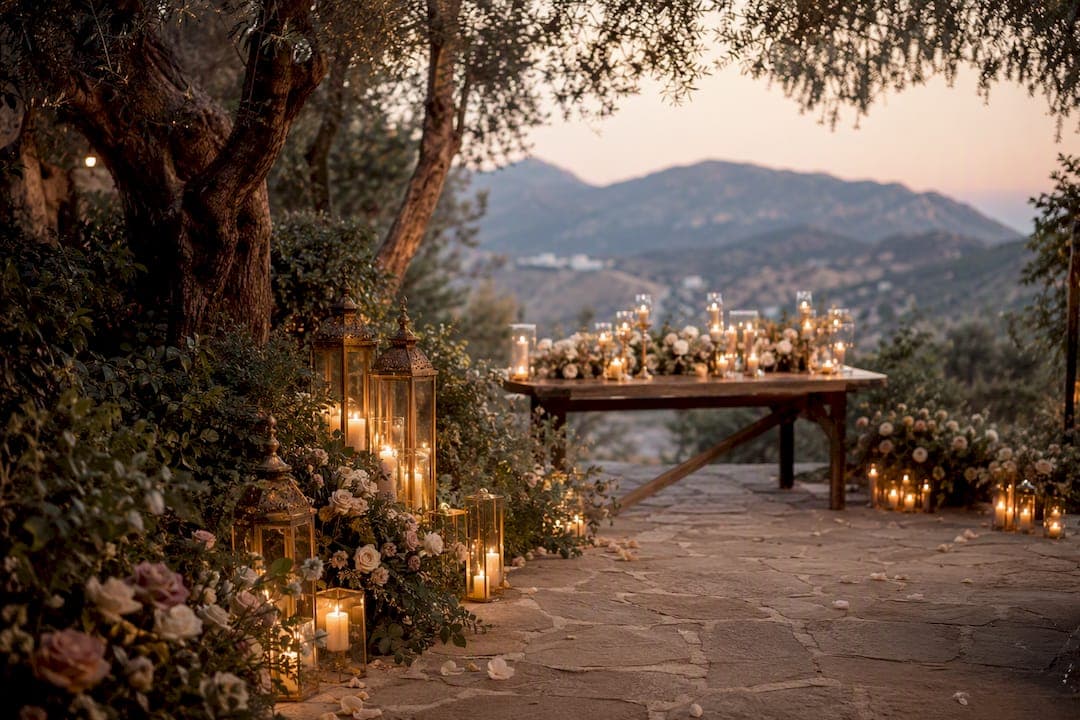
Wedding atmosphere is the emotional environment you create through sensory and social design. It is everything guests feel but rarely name: the lighting that makes a room glow rather than glare, the music that carries them from ceremony to dance floor, the scent of orange blossom drifting across a garden at dusk.
The fastest way to define your own version of it is a simple exercise. Recall a moment that felt exactly right, a dinner, a holiday, a quiet evening, and pull three words from that memory. Perhaps it is romantic, grounded, abundant. Those three words become the filter for every decision that follows, from the florist's brief to the DJ's playlist.
Before you read another paragraph, do this:
- Choose your three mood words together, as a couple, before you book a single supplier.
- Audit your shortlisted venue against those words. Does its architecture and landscape already lean romantic, rustic, or grand, or will you be fighting it?
- Brief your key vendors early. Give your photographer, band and florist the same three words so every choice pulls in one direction.
Key Takeaways
Wedding atmosphere is built deliberately through sensory design, consistent mood words and careful pacing, not left to chance or decoration alone.
| Point | Details |
|---|---|
| Define atmosphere clearly | It is the emotional environment created through sight, sound, smell, taste, touch, pacing and comfort. |
| Choose three mood words | Pick words like romantic, grounded or abundant, then filter every vendor decision through them. |
| Prioritise lighting and sound | These two elements shape mood more than table décor, so budget for them first. |
| Plan pacing, not just decor | Music should frame ceremony, cocktail and dinner transitions to avoid energy-draining gaps. |
| Let the venue do the work | Dragonfly Dream Weddings' gardens, Rose Pool and layered lighting build atmosphere with less production effort. |
Table of Contents
- The sensory framework behind wedding atmosphere
- Choosing three mood words your vendors can actually use
- Ceremony to party: a timeline checklist for atmosphere
- Where to spend for the biggest atmospheric impact
- Dos and don'ts for a memorable wedding mood
- Atmosphere in practice: the Dragonfly Dream Weddings example
- How culture and season shape your wedding atmosphere
- Aligning attire and décor with your chosen mood
- Planner's note: continuity over perfection
- Bring your mood words to life at Dragonfly Dream Weddings
- Sources
- FAQ
The sensory framework behind wedding atmosphere
Atmosphere is built from five ingredients: sight, sound, smell, taste and touch. Miss one and the whole design feels thinner than it should.
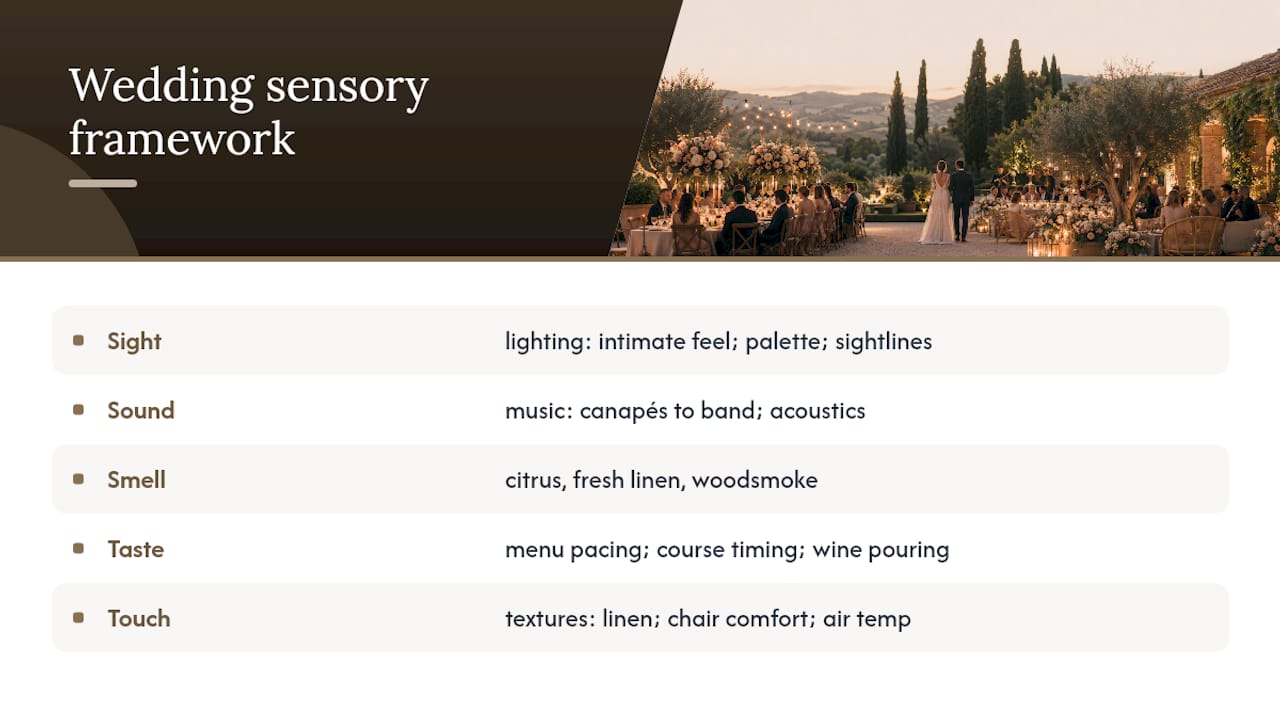
Sight covers lighting, colour palette and sightlines. A cohesive palette and softened lighting make a large space feel intimate, while stark white light and clashing colours do the opposite, however good your flowers are. Sound is your music, from the acoustic guitarist during canapés to the band that fills the dance floor later. Smell is underused and hugely effective: a citrus grove, fresh linen, or woodsmoke from an evening fire pit anchors a memory more powerfully than almost anything else. Taste is not just menu choice but pacing, how courses arrive, how wine is poured, whether the meal feels rushed or savoured. Touch covers textures: linen weight, chair comfort, the temperature of the air on your skin at golden hour.
Lighting deserves particular attention. Sensory design across sight, sound, smell, taste and touch is the accepted framework for wedding atmosphere, and lighting is repeatedly named the single most powerful tool within it, more than flowers, more than table linen, more than favours. It decides whether a space reads as intimate, celebratory or flat the moment the sun goes down.
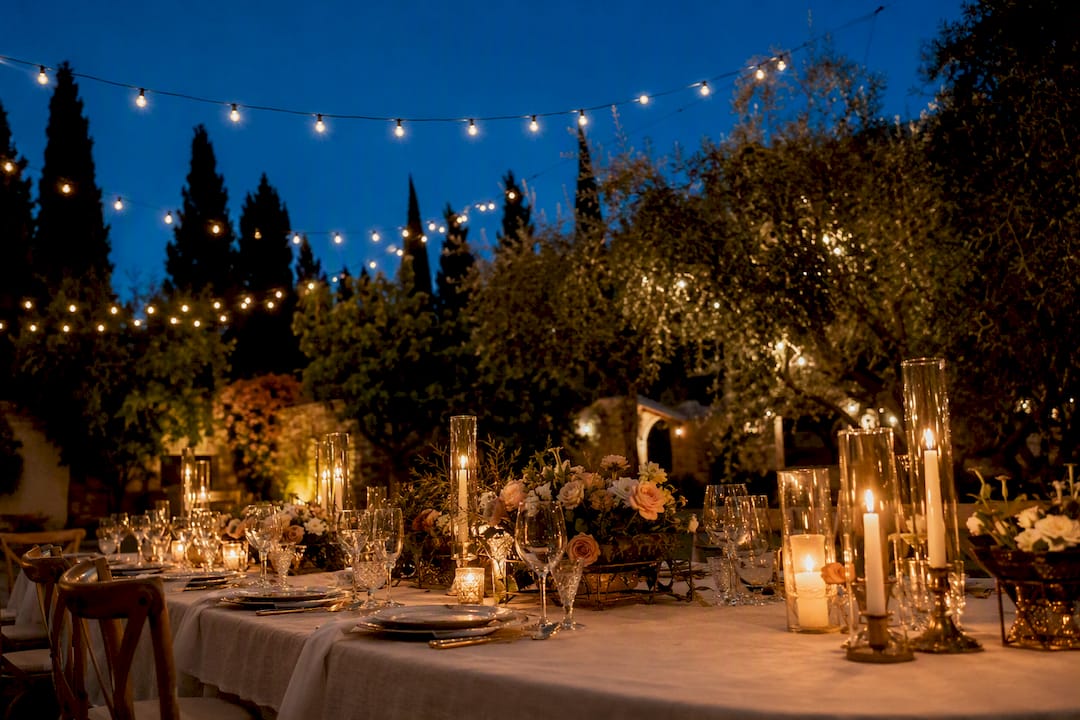
Comfort and acoustics sit quietly underneath all five senses. Guests who are too cold, too hot, or straining to hear a speech will not register your carefully chosen candlelight. A well-placed patio heater or shaded lounge area does as much for atmosphere as any styling choice.
Pro Tip: Walk your ceremony and reception spaces at the exact hour your wedding will happen, months in advance if you can. Light behaves completely differently at 4pm than at 7pm, and that single walk-through will save you from surprises on the day.
Choosing three mood words your vendors can actually use
Your mood words only earn their keep if you apply them consistently, so treat the exercise as a short, repeatable process rather than a one-off brainstorm.
- Recall a feeling, not a look. Think of a place or moment that felt right, then ask what emotion it carried, rather than what it looked like.
- Narrow to three words. Words like 'grounded', 'romantic' or 'abundant' each carry different implications. Grounded suggests natural materials and low, warm lighting. Romantic points to candlelight and soft strings. Abundant means generous florals, long tables and layered courses.
- Test every decision against them. Before booking a supplier or approving a mood board, ask whether the choice pushes towards your three words or away from them.
Share the words directly with your coordinator, photographer, band and florist in your first briefing. It gives everyone a shared shorthand, and stops decision fatigue creeping in six months before the day.
Ceremony to party: a timeline checklist for atmosphere
Atmosphere is not one decision. It is a sequence of small ones, made at each stage of the day, that either flow into each other or fight each other.
Ceremony
- Choose an arrival scent (fresh flowers, citrus trees, sea air) that guests notice as they take their seats.
- Pick entrance music that matches your mood words, not just a song you like.
- Check sightlines so every guest has a clear view of the moment itself, not a floral arch blocking their view.
Drinks reception
- Book live background music, an acoustic guitarist or trio works well here, to carry energy without demanding attention.
- Create at least one lounge area with low seating to draw guests out of a single cluster near the bar.
- Plan circulation routes so guests move naturally between spaces rather than pooling at the entrance.
Dinner
- Layer table lighting (candles plus a soft uplight) rather than relying on overhead fixtures alone.
- Balance acoustics so speeches are audible without a microphone screeching across stone walls.
- Cue speeches between courses, not right at the start, to keep pacing natural.
Party
- Shift lighting contrast, dim the room, brighten the dance floor, to signal the tone change.
- Position the DJ or band with clear sightlines to the dance floor and easy bar access nearby.
- Loosen seating plans so guests are not tied to a table when the music changes.
Music should frame every one of these transitions, because a poorly planned schedule with long silent gaps is where guest energy quietly drains away. Spatial flow matters just as much: dead zones form when tables or bars are poorly placed, splitting a room that should feel like one continuous celebration.
Where to spend for the biggest atmospheric impact
Not every pound spent on your wedding buys the same amount of atmosphere. Some spending changes how a space feels; the rest is decoration guests barely register.
- Lighting and production first. Ambient lighting and staging work subconsciously on guests and consistently outperform spending the same money on table décor alone.
- Live sound and music second. A daytime musician or evening band does more to hold your day together than a second floral installation ever will.
- Spatial layout and seating third. Comfortable chairs, sensible lounge zones and clear circulation cost less than you think and prevent the dead zones that flatten a party.
When meeting suppliers, ask direct questions: "How will your lighting create intimacy at dusk?" or "What happens acoustically once fifty more people arrive?" Budget-conscious couples can still layer candles with rented uplighting, or hire acoustic-friendly furniture, and get most of the effect for a fraction of the cost.
Dos and don'ts for a memorable wedding mood
- Do walk your key spaces at the actual hour of your wedding to test how light and temperature behave.
- Do plan music specifically for transitions, not just for background noise.
- Don't over-cluster seating into one dense block; it kills circulation and creates awkward pockets of silence.
- Don't rely on table décor alone to carry your atmosphere; it is the smallest lever you have.
- Do build in slack in your timeline so pacing feels natural rather than rushed.
- Do stay present rather than trying to engineer every second, because the couples who enjoy their own day tend to be the ones guests remember as radiant, not the ones who chased perfection.
Atmosphere in practice: the Dragonfly Dream Weddings example
At Dragonfly Dream Weddings, the Andalusian countryside near Coín does a good deal of the atmospheric work before a single candle is lit. A venue that already carries your mood through its own architecture and landscape removes the need for heavy production, which is precisely what happens across the Mediterranean gardens, mountain views and the Rose Pool.
Ceremonies here play out against olive trees and stone, so lighting choices lean towards candlelight and soft gold rather than anything harsh. Pool parties around the Rose Pool are layered with warm uplighting as the sun drops, shifting the same space from relaxed daytime gathering to something more celebratory by evening. Dinners inside Dragonfly Hall pair textured linens and low candlelight with live music that carries guests from canapés through to dancing without a jarring change of tone.
Couples planning a three-day wedding weekend can see exactly how these choices play out across the full Dragonfly gallery, or explore practical questions in the venue's FAQs.
How culture and season shape your wedding atmosphere
Season decides more of your atmosphere than most couples expect before they start planning. A spring wedding leans naturally towards fresh, pale colour palettes and lighter fabrics, while a late-summer evening invites deeper golds, bare shoulders and long alfresco dinners that run past midnight. Winter weddings shift the mood indoors, where candlelight, dark florals and rich textiles carry more weight because there is less daylight to work with.
Culture plays an equally strong role, and it is worth naming rather than glossing over. A traditional Irish wedding often carries live folk music and a longer, more informal reception; a Mediterranean-style celebration leans into long shared tables, abundant food and wine served late into the evening; South Asian ceremonies bring layered rituals across multiple days, each with its own colour and mood. None of these are decoration choices bolted onto a generic wedding. They are the atmosphere.
For couples marrying away from home, a destination wedding weekend gives you room to blend both. You might keep a family ritual for the ceremony itself, then let the surrounding climate and landscape set the tone for everything after, a long lunch under trees, an evening that stays warm enough for guests to linger outside past midnight. Southern Spain's climate in particular allows for outdoor ceremonies and late alfresco dinners across a longer stretch of the year than most of Northern Europe, which is part of why so many couples choose it for atmosphere alone, not just convenience.
Think of season and culture as constraints that sharpen your three mood words, not obstacles to override. A word like "abundant" looks different in April than in September, and that difference is worth planning around rather than fighting.
Aligning attire and décor with your chosen mood
Your outfits are part of the sensory design, not separate from it. A dress with heavy structure and a full train reads formally, and it can sit oddly against a relaxed garden reception with wildflower centrepieces and bare wooden tables. Matching the weight and formality of attire to your venue and décor keeps the whole day visually coherent rather than working against itself.
Fabric choice matters more than most couples budget time for. Silk and structured tailoring suit an elegant, formal atmosphere with crystal glassware and tight florals. Linen, cotton and looser silhouettes suit a relaxed, rustic mood with pampas grass, long trestle tables and market-style lighting. If your three mood words include something like "grounded" or "natural", a heavily beaded gown or a rigid three-piece suit may quietly contradict the feeling you are building elsewhere.
Colour is the simplest bridge between attire and décor. Bridesmaids or groomsmen in tones lifted from your florals, rather than a generic "wedding palette", tie the wedding party visually into the same design as your tablescape and lighting. Grooms and their party can echo this with waistcoat colours, tie fabrics or even boutonnieres that pull from the same seasonal palette as the centrepieces.
Talk to your dressmaker or tailor early about where the wedding will happen. A heavy fabric that photographs beautifully in a cool, shaded church can feel completely wrong under an Andalusian afternoon sun, and a good tailor will steer you towards breathable alternatives that still hold the silhouette you want.
Planner's note: continuity over perfection
Focus on continuity, not perfection. A slightly imperfect toast or a candle that gutters in the breeze rarely registers with guests; what they remember is whether the day flowed.
Run a short rehearsal that tests your transitions and music cues end to end, not just the ceremony vows. It catches the awkward gaps before your guests ever notice them.
Bring your mood words to life at Dragonfly Dream Weddings
Dragonfly Dream Weddings gives you three full days, not three hours, to build the atmosphere your mood words describe, with boutique accommodation for up to 20 guests on site, nearby stays for larger parties, and celebrations for up to 100 guests across the Mediterranean gardens, the Rose Pool and Dragonfly Hall.
If you want to test whether a venue matches your three words before committing to anything, book a private viewing and walk the gardens and pool area at the time of day your ceremony would actually happen. You will see the light, hear how sound carries across the lawns, and get a real sense of the pacing a three-day wedding weekend allows that a single-day venue simply cannot offer.
Sources
Further reading on sensory design, pacing and live music informed this guide, alongside the Dragonfly Hall venue page.
- Design a memorable wedding atmosphere | Wedding Style Blog
- How to build wedding atmosphere | The Hitmen Trio
- How to plan your wedding around a feeling | Wed&
- Wedding atmosphere Queensland: Create unforgettable moments | Wedding QLD
FAQ
What does wedding atmosphere actually mean?
It is the emotional environment created through sensory design, lighting, sound, scent, taste and touch, plus how guests interact and move through the space.
How do I choose my wedding mood words?
Recall a memory that felt right, distil it into three words, then use those words to filter every vendor and design decision.
What creates atmosphere more than décor?
Lighting and live sound consistently outperform table décor for shaping mood, because they work on guests subconsciously throughout the day.
Does the venue itself affect atmosphere?
Yes. A venue whose architecture and landscape already match your mood words, like the gardens and Rose Pool at Dragonfly Dream Weddings, reduces the production work needed to create that feeling.
How does pacing affect wedding mood?
Music should frame transitions between ceremony, cocktail hour and dinner, since long gaps without cues let guest energy and engagement drop.