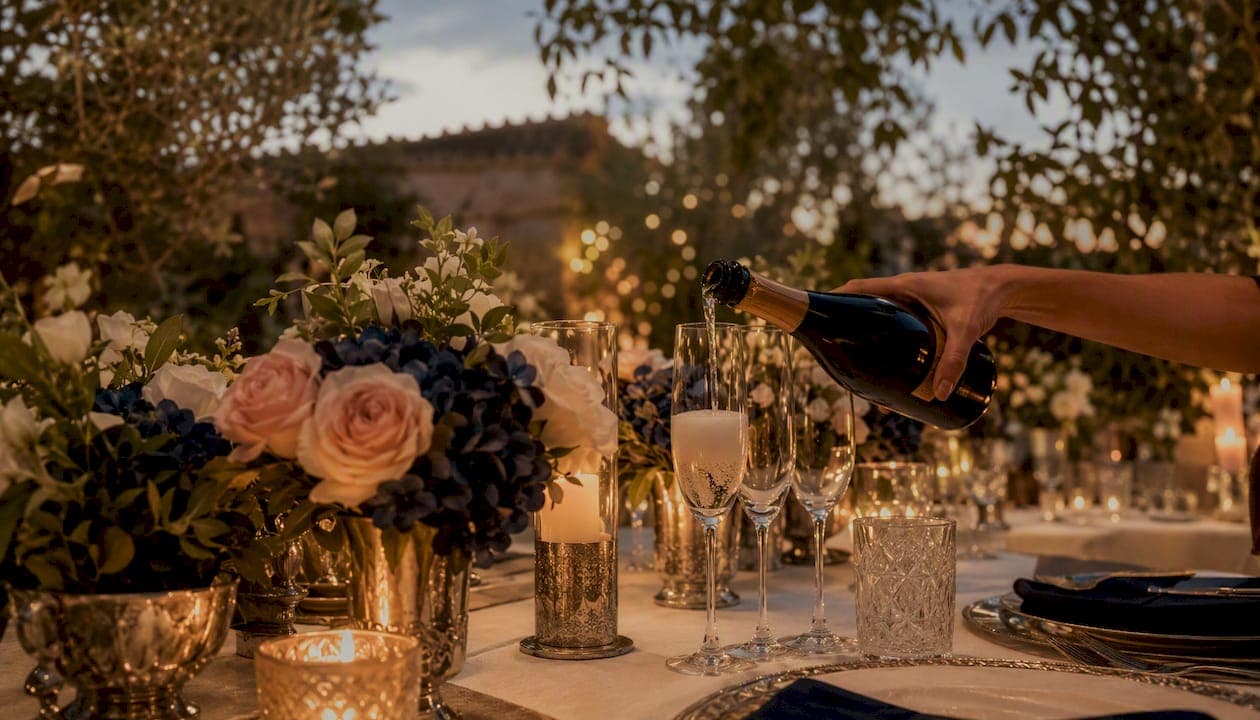
For most couples planning a destination wedding in Southern Spain, late spring (May to June) and early autumn (September to October) offer the best overall balance of comfortable temperatures, long daylight hours, excellent photography light, and reasonable value. If you can only choose one window, September stands out: warm evenings, golden afternoon light, and noticeably better venue and vendor availability than the summer peak.
That said, the right season depends on your priorities:
- Summer (July–August): Best for couples who want guaranteed heat, a vibrant party atmosphere, and long evenings by the pool. Requires careful scheduling around midday heat and higher costs.
- Winter (November–February): Ideal for intimate celebrations on a tighter budget. The Costa del Sol stays mild, with daytime highs of 15–19°C, making outdoor events genuinely viable.
- Spring (March–April): Suits couples who love blossom and softer light but can accept a small risk of rain and cooler evenings.
Key takeaways
The best season for a destination wedding in Southern Spain is late spring or early autumn, with September and May standing out for their balance of weather, light, and value.
| Point | Details |
|---|---|
| Best overall seasons | May and September offer the strongest balance of weather, photography light, and value in Southern Spain. |
| Booking lead times | Peak-season Saturdays need 12–18 months ahead; shoulder-season dates typically need 9–12 months; off-season 6–9 months. |
| Guest comfort | Older guests and families with children fare best in May, September, or October rather than peak summer heat. |
| Cost levers | January and November are the cheapest months for travel and accommodation; weekday dates in peak months also reduce costs. |
| Dragonfly Dream Weddings | Three-day wedding weekends at Dragonfly suit every season, with the Rose Pool, Dragonfly Hall, and on-site accommodation for up to 20 guests. |
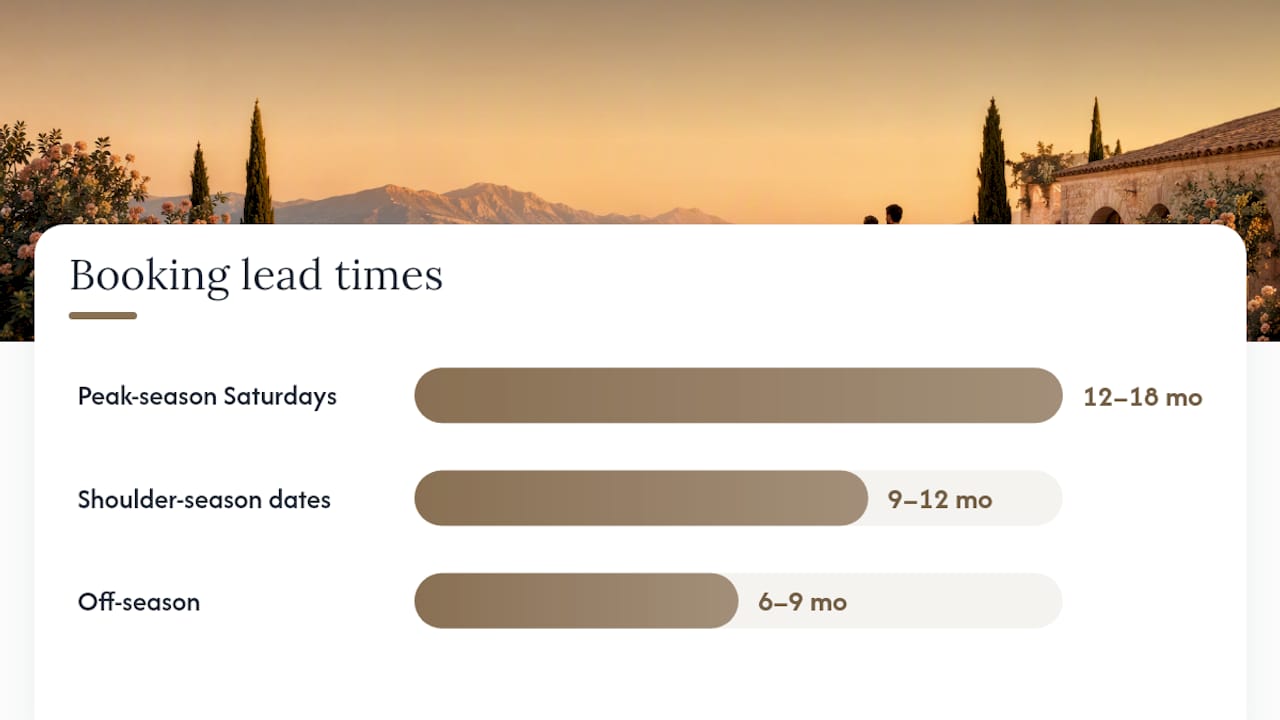
Table of Contents
- How seasons change the most important factors in your wedding
- A season-by-season guide: what to expect in Mediterranean and Central European destinations
- How seasonality affects price, bookings, and vendor availability
- Guest travel, daylight, festival clashes, and seasonal accessibility
- Practical planning actions by season: schedule, contingencies, and vendor questions
- Planner insight and real-world examples from Dragonfly Dream Weddings
- How to match your priorities to the right season
- What to wear: seasonal attire for Central European couples
- Plan your season with Dragonfly Dream Weddings
- Sources
- FAQ
How seasons change the most important factors in your wedding
The role of seasons in destination weddings goes well beyond whether it rains. Six core factors shift meaningfully with the calendar, and understanding each one helps you plan rather than guess.
- Temperature and guest comfort: Inland Andalusian cities can exceed 40°C in July and August, which changes everything from ceremony length to dress code. Coastal venues run 5–8°C cooler, but heat management still matters.
- Rainfall probability: Andalucía's wettest months run from November through March; spring carries some residual rain risk, while summer is almost entirely dry.
- Daylight hours: Midsummer sunsets in Southern Spain can fall as late as 21:30–22:00, giving you extraordinary flexibility. Winter days are shorter, which compresses your outdoor schedule.
- Vendor and accommodation demand: Peak season broadly covers May through October, concentrating demand and pushing prices up. Shoulder and off-season dates free up your preferred suppliers.
- Cost pressure: High summer Saturdays carry premium pricing across venues, catering, and accommodation. Shifting even one month earlier or later can reduce costs noticeably.
- Sea and pool temperature: For venues with a pool, water temperature peaks in August and September, making late-summer pool parties genuinely comfortable.
Pro Tip: Plan your ceremony to begin roughly 90 minutes before sunset. In Southern Spain, golden hour light is softer and more flattering than midday sun, and the transition from ceremony to drinks reception feels natural as the evening cools.
A season-by-season guide: what to expect in Mediterranean and Central European destinations
Spring (March–May)
Temperatures across coastal Andalucía typically range from 15°C in March to 25°C by late May. Blossom is abundant, light is soft and photogenic, and the landscape is green rather than parched. The main caveat is rain: March and April carry a real, if modest, chance of showers, so an indoor backup space is non-negotiable.
Who it suits: Couples who prioritise photography and floral abundance over guaranteed heat. May is the standout month: May and June consistently offer some of the best weather and value in Andalucía, with warm days, low humidity, and manageable crowds.
- Northern Central Europe in spring: expect 10–18°C, variable cloud, and a higher rain risk than the Mediterranean coast.
- Mediterranean islands (Mallorca, Cyprus): similar to coastal Andalucía but slightly warmer and drier by May.
Summer (June–August)
June is still manageable on the coast, but July and August are genuinely hot. Inland cities regularly exceed 40°C; coastal venues sit lower but still demand careful planning. The upside is extraordinary: long evenings, a festive atmosphere, and guests who arrive expecting warmth and celebration.
The key is scheduling. Local planners in Andalusia recommend following a siesta rhythm: a shaded, relaxed afternoon, then a late ceremony from 19:00 or 20:00 onwards, followed by a reception that runs into the cool of the night. Abundant hydration stations, shaded cocktail areas, and a reliable indoor backup are not optional in August.
Who it suits: Couples who want a high-energy, sun-drenched celebration and whose guests are comfortable in heat. Families with young children or older guests may find August challenging.
- August in Spain also brings local holiday closures. Confirm supplier availability early; some smaller vendors take extended breaks.
Pro Tip: For a summer wedding, ask your venue specifically about their cooling strategy: ceiling fans, misting systems, and shaded terraces make a measurable difference to guest comfort during cocktail hour.
Autumn (September–November)
September and October are, for many planners, the finest months for destination weddings in Southern Spain. Temperatures settle into the low-to-mid 20s°C, evenings are warm without being oppressive, and the light turns genuinely golden. Vendor availability improves after the summer rush, and pricing begins to ease.
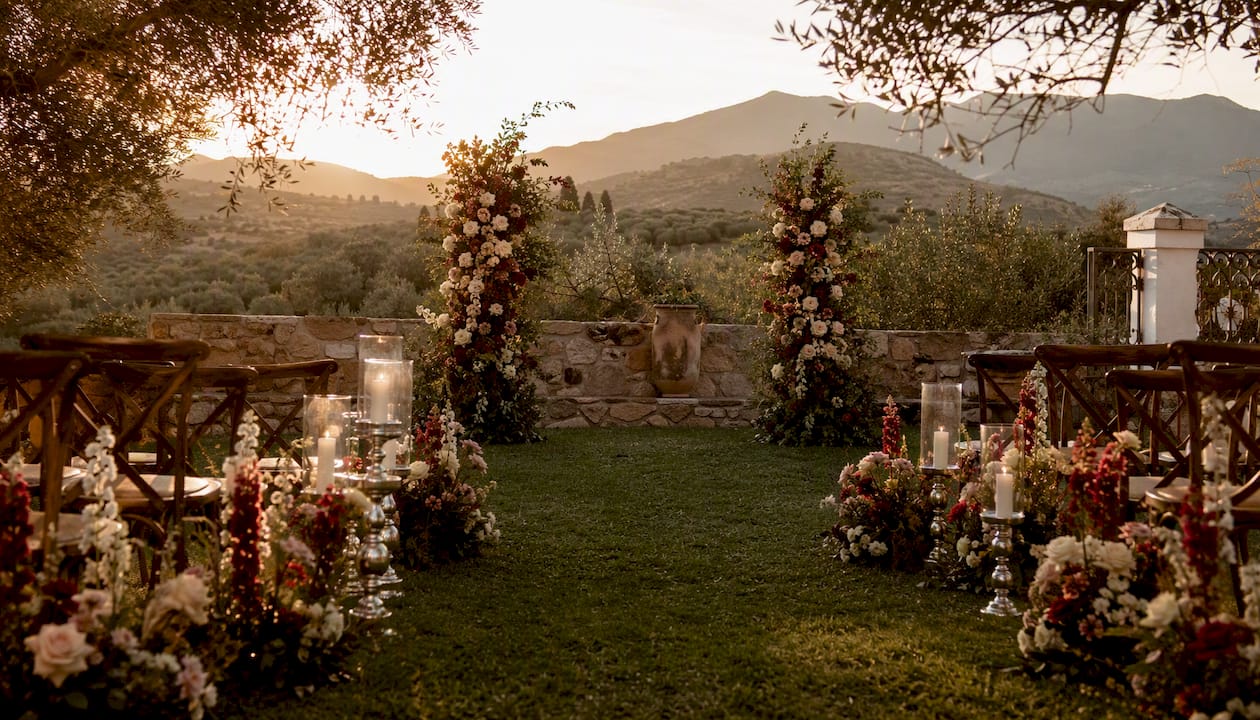
November brings a shift: cooler evenings, a higher chance of rain, and shorter days. It suits couples who want a quieter, more intimate feel and are happy to work with a shorter outdoor window.
Who it suits: Almost everyone. September in particular suits couples who want summer warmth without summer heat, and photographers consistently rate October light as exceptional.
- September and October are among the most balanced months for outdoor events in Andalucía, with comfortable temperatures and low rainfall.
Winter (December–February)
The Costa del Sol earns its name in winter. With over 300 days of sunshine annually and mild daytime temperatures, outdoor ceremonies in December and January are entirely realistic. Evenings cool quickly, so a heated indoor space matters, but the overall experience can be genuinely beautiful: clear skies, low crowds, and a sense of privacy that peak season rarely delivers.
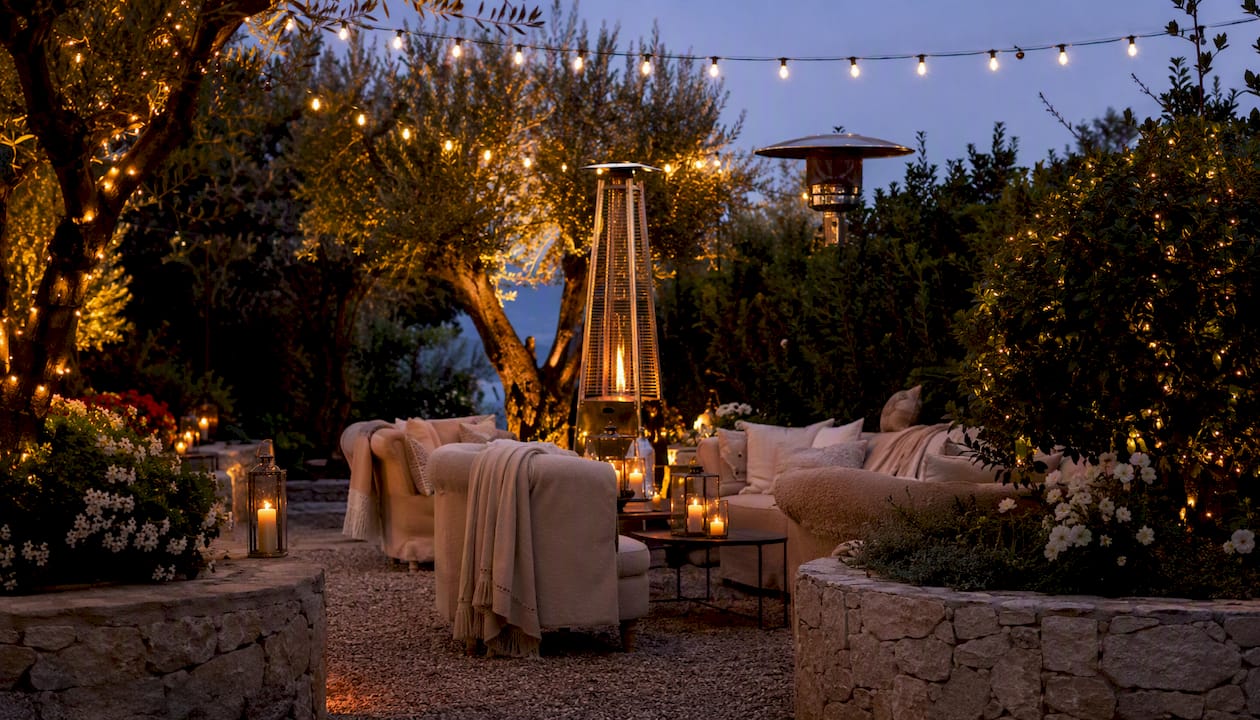
January and November are typically the cheapest months for travel and accommodation in Andalucía, which makes winter weddings attractive for budget-conscious couples.
Who it suits: Couples planning intimate celebrations of 20–40 guests, those on a tighter budget, and anyone who wants the venue largely to themselves.
How seasonality affects price, bookings, and vendor availability
Seasonal pricing in Southern Spain follows tourism demand closely. School holidays, local festivals, and the general European summer exodus all push costs upward between June and August. The practical consequences for destination wedding planning are significant.
- Peak season (June–August Saturdays): Venues, caterers, photographers, and accommodation all price at their highest. Saturdays in peak season commonly require booking 12–18 months ahead to secure your preferred date and suppliers.
- Shoulder season (May, September–October): Prices ease by a meaningful margin, availability opens up, and suppliers are often more flexible on package details. Booking 9–12 months ahead is generally sufficient for a Saturday.
- Off-season (November–April, excluding Easter): The most budget-friendly window. Many venues and suppliers offer their lowest rates, and lead times of 6–9 months are often workable for a Friday or Sunday.
Pro Tip: A Friday or Sunday wedding in peak season can yield better vendor availability and lower costs than the equivalent Saturday date. Many couples find their guests appreciate a long weekend format anyway, which suits a three-day wedding weekend perfectly.
Cost levers worth knowing:
- Choosing a weekday date in peak months can reduce venue and catering costs noticeably.
- Booking a multi-day package (rather than a single-day hire) often unlocks better overall value, as fixed costs spread across more events.
- January and November are typically the cheapest months for travel and accommodation, which reduces the total cost for guests as well as the couple.
For a detailed cost breakdown by season, the cost of a wedding in Spain for UK couples guide covers current pricing across different provider types.
Guest travel, daylight, festival clashes, and seasonal accessibility
Your guests' experience begins before they arrive. Season affects flight frequency, accommodation rates, and how comfortable the journey feels.
Flights and transport:
- Summer sees the highest frequency of direct flights from the UK and Ireland to Málaga, which helps guests travelling to Southern Spain.
- Winter schedules reduce frequency on some routes; check airline timetables for your specific dates before confirming.
- Ferry and boat services to Mediterranean islands follow seasonal timetables and may be limited outside summer.
Daylight and ceremony timing:
- A June ceremony has until nearly 22:00 before darkness falls, giving you enormous flexibility.
- A December ceremony needs to start by 15:30–16:00 to capture any natural outdoor light.
- Check exact sunrise and sunset times for your chosen date and location at Sunrise-sunset when scheduling your day.
Festival and holiday clashes to watch:
- Semana Santa (Holy Week, March–April): beautiful but busy. Roads, accommodation, and local vendors are under pressure across Andalucía.
- Feria de Málaga (mid-August): a wonderful local festival, but it competes for accommodation and vendor attention.
- Spanish national holidays in August: some local suppliers close for extended periods.
- Christmas and New Year: accommodation prices spike; some vendors are unavailable.
Guest checklist to include with invitations:
- Clothing guidance matched to the season (see the attire section below).
- Recommended arrival and departure dates for a three-day format.
- Notes on airport transfers and local transport options.
- A reminder to check official travel advice for any entry or health requirements.
- Accessibility notes: shaded seating, step-free access, and proximity to on-site accommodation for older or less mobile guests.
Practical planning actions by season: schedule, contingencies, and vendor questions
Turn seasonal knowledge into a working checklist before you speak to venues and suppliers.
Season-aware planning checklist:
- Confirm whether the venue has a reliable indoor backup space and what triggers its use.
- For summer: ask about cooling systems, shaded areas, and the venue's recommended ceremony start time.
- For winter: ask about heating in outdoor spaces and the latest viable outdoor finish time.
- For spring and autumn: confirm the venue's rain contingency plan and how quickly it can be activated.
- Check local holiday calendars for your chosen month and confirm all key suppliers are available on your date.
Questions to ask venues and suppliers:
- What is your recommended ceremony start time for our chosen month?
- Do you have an indoor backup space, and what is the transition plan if we need it?
- Are any of your preferred suppliers unavailable in August or during local festivals?
- What lighting do you use for evening receptions in shorter-day months?
- Can you provide references from couples who married in the same season?
Styling and menu notes by season:
- Spring: peonies, ranunculus, and garden roses are at their best. Menus can feature lighter dishes and local asparagus.
- Summer: tropical blooms, sunflowers, and succulents hold up in heat. Menus lean towards cold starters, fresh seafood, and chilled desserts.
- Autumn: dahlias, dried grasses, and warm terracotta tones suit the golden light. Seasonal game, mushrooms, and local wines make menus feel grounded.
- Winter: amaryllis, white roses, and evergreen foliage. Hearty Andalusian stews and warm desserts work beautifully for evening receptions.
Pro Tip: For outdoor ceremony photography, ask your photographer to confirm the exact golden hour window for your date and location. In September in Málaga, golden hour typically begins around 19:30, which makes a 18:30 ceremony start ideal.
Planner insight and real-world examples from Dragonfly Dream Weddings
Dragonfly Dream Weddings, set in the Andalusian countryside near Coín, Málaga, stages its three-day wedding weekends differently depending on the season. The multi-day format is itself a seasonal tool: it lets couples sequence activities to avoid the hottest slot or make the most of long evenings.
How a spring weekend typically flows:
- Friday evening: welcome dinner in the Mediterranean gardens as the sun sets around 20:30.
- Saturday: relaxed morning for guests, outdoor ceremony at 18:00, reception into the night.
- Sunday: farewell brunch on the terrace, guests depart mid-afternoon.
How an autumn weekend typically flows:
- Friday evening: welcome drinks by the Rose Pool as temperatures ease to the low 20s°C.
- Saturday: ceremony at 17:30 to capture October's golden hour, followed by a long candlelit reception.
- Sunday: farewell brunch with the Andalusian hills in full autumn colour as a backdrop.
Dragonfly Dream Weddings accommodates up to 20 guests on-site in boutique accommodation, with additional options nearby for larger groups, and can host celebrations of up to 100 guests across the Rose Pool, Dragonfly Hall, and Mediterranean gardens.
Pro Tip: In high-summer months, Dragonfly's in-house coordinator recommends scheduling the pool party for late afternoon (from around 16:00) rather than midday, then moving guests indoors or to shaded areas before the ceremony. This keeps energy high without anyone wilting in the heat.
For a broader look at destination weddings in Southern Spain, including venue considerations and regional logistics, the venue guide covers the full picture.
How to match your priorities to the right season
Work through this checklist before confirming any date.
- Clarify your non-negotiables. Write down your top three priorities: photography, guest comfort, budget, party atmosphere, or intimacy.
- Assess your guest profile. Older guests or families with young children often struggle in peak summer heat. A September or May date is usually more inclusive.
- Check your budget flexibility. If budget is tight, November, January, or a weekday in May will give you the most room.
- Research your venue's microclimate. Coastal venues run cooler than inland ones. A site visit in your target season is the most reliable way to understand what your guests will actually experience.
- Confirm supplier availability for your shortlisted dates before falling in love with a specific weekend.
- Book your date. For a peak-season Saturday, aim to confirm 12–18 months ahead. Shoulder-season Saturdays typically need 9–12 months; off-season dates often work with 6–9 months.
Season-to-priority matching:
- "We prioritise photos": September or October. The light is exceptional and temperatures are comfortable for outdoor portraits.
- "We prioritise budget": November, January, or a weekday in May or October.
- "We want a party atmosphere": July or August, with a late ceremony and a long evening reception.
- "We want intimacy": Winter or early spring, with a smaller guest list and the venue largely to yourselves.
Questions to ask when comparing dates with venues:
- What is the average temperature and typical weather for our chosen month at this specific location?
- What seasonal events or local holidays fall near our date?
- Which suppliers do you recommend for this season, and are they available?
Pro Tip: Book a private venue viewing in your target season if at all possible. Seeing the gardens, pool, and light conditions at the time of year you plan to marry is worth more than any number of photographs.
What to wear: seasonal attire for Central European couples
Clothing choices matter more at a destination wedding than at a home-market celebration, because your guests are travelling and may not know what to expect.
Spring (March–May): Couples and guests can wear lighter fabrics, but evenings in March and April still cool to 12–15°C on the coast. Brides often choose flowing chiffon or lace; grooms suit linen or lightweight wool. Guests should bring a light layer for the evening.
Summer (June–August): Natural fabrics are non-negotiable. Linen, cotton, and silk breathe; synthetic fabrics do not. Brides in summer often opt for lighter silhouettes: a simpler cut, less boning, and minimal layers. Grooms in linen suits or even a well-cut shirt and trousers are entirely appropriate at a relaxed Andalusian venue. Guests in formal attire should be warned about the heat and given permission to dress practically.
Autumn (September–October): The most forgiving season for attire. Temperatures allow for more structured gowns and suits without discomfort. Velvet, heavier lace, and richer colours all work beautifully in October light. Evenings can cool to 16–18°C by late October, so a wrap or jacket for guests is sensible.
Winter (December–February): Heavier fabrics come into their own. A bride in a long-sleeved gown or with a fur-trimmed wrap looks entirely at home. Guests should be advised to bring a coat for outdoor moments, even if the daytime temperature is mild. For a destination wedding guest experience that feels considered, include specific clothing guidance in your invitations.
The season you choose tells guests who you are
The Dragonfly Dream Weddings planning team has worked with couples across every season, and the pattern is consistent: the couples who choose most confidently are the ones who started with their own priorities rather than a generic "best month" list. A September wedding and a January wedding at the same venue are genuinely different experiences, and both can be extraordinary. What we find, again and again, is that the couples who visit in their target season, see the light, feel the temperature, and walk the gardens at that time of year, almost always stop second-guessing. The season stops being a variable and becomes part of the story they want to tell.
Plan your season with Dragonfly Dream Weddings
Three-day wedding weekends in Southern Spain give you something a single-day venue hire cannot: the freedom to let the season breathe. A welcome dinner in the gardens on Friday, a ceremony timed to the golden hour on Saturday, a farewell brunch on Sunday morning. At Dragonfly Dream Weddings, that format works across every season because the venue is designed for it: boutique on-site accommodation for up to 20 guests, space for celebrations of up to 100, the Rose Pool, Dragonfly Hall, and Mediterranean gardens that look different and beautiful in every month of the year.
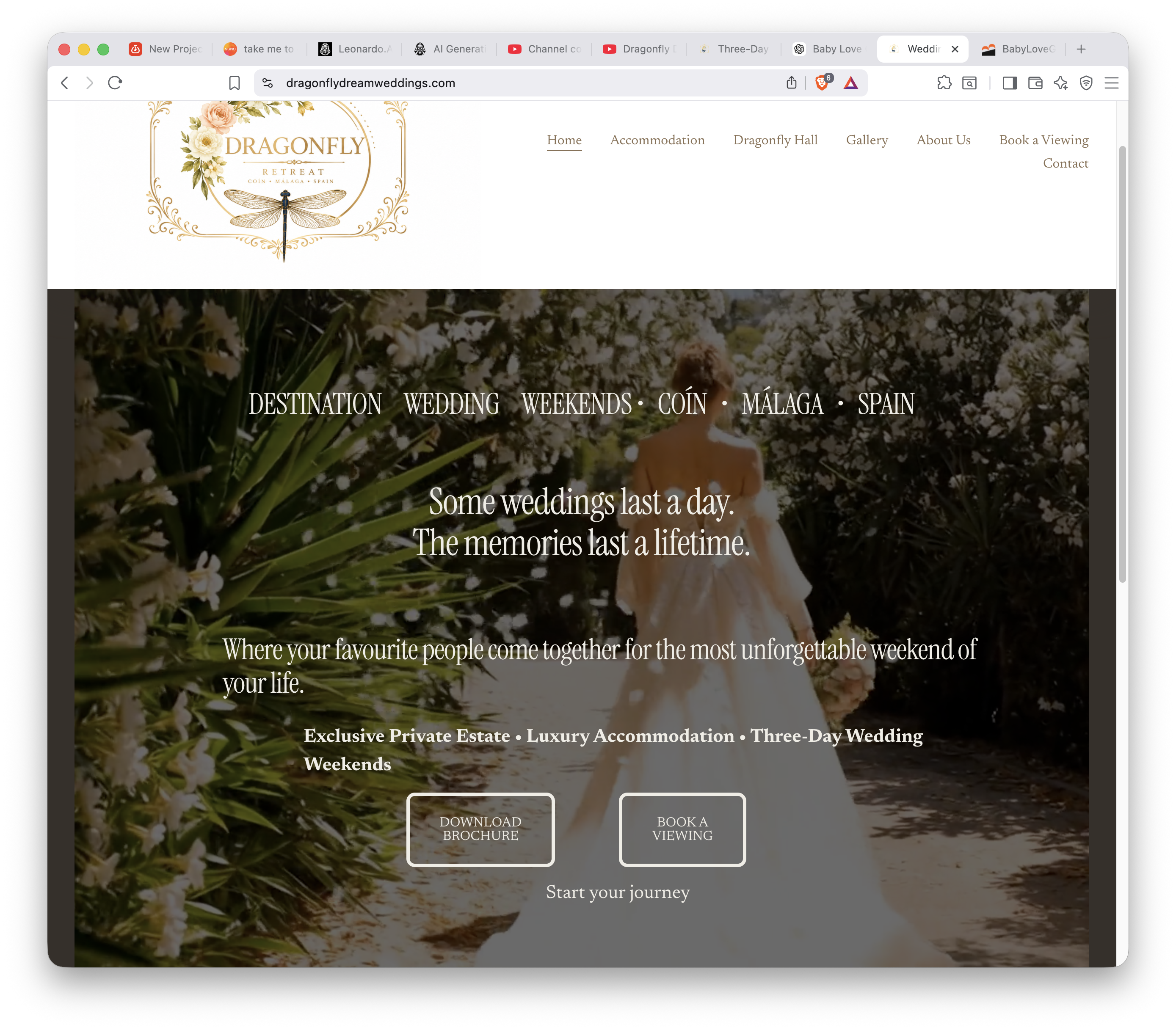
Whether you are drawn to May blossom, September gold, or a quiet winter weekend with your closest people, the best next step is to see it for yourself. Book a private viewing in your target season, or explore the full three-day wedding packages to understand what is included and how the multi-day format changes the seasonal trade-offs in your favour.
Sources
The following sources informed this guide. Check them directly for current climate data and sunrise/sunset times when scheduling your ceremony.
- Visit Costa del Sol
- Andalucia365 — Weather & climate
- Andalucia365 — Month by month
- Destination Wedding in Spain: Everything You Need to Know in 2026 | Longtake Film
- Destination Wedding Spain: How to Plan Your Wedding from Abroad - TU BODA BARCELONA
Southern Spain records over 300 days of sunshine per year, which means even off-season dates carry a strong probability of clear skies for outdoor ceremonies.
FAQ
Which month is best for a destination wedding in Southern Spain?
September is the standout month for most couples: warm evenings, golden afternoon light, and better venue and vendor availability than the summer peak. May is a close second, offering blossom, comfortable temperatures, and strong value.
What are the main wedding seasons in Spain?
Peak season runs broadly from May through October, with the highest demand and prices concentrated in June, July, and August. Shoulder season covers May and September to October; off-season runs from November through April, excluding Easter week.
How far ahead should you book a destination wedding?
For a peak-season Saturday in Southern Spain, book 12–18 months ahead to secure your preferred venue and suppliers. Shoulder-season Saturdays typically need 9–12 months; off-season or weekday dates often work with 6–9 months' notice.
What is the rarest month to get married?
January is statistically among the least popular months for weddings across Europe, which makes it one of the most available and affordable options for couples who want an intimate celebration with minimal competition for venues and suppliers.
Does season affect what guests should wear to a destination wedding?
Yes, significantly. Summer weddings in Andalucía call for natural fabrics such as linen and cotton; autumn and winter weddings allow for heavier fabrics and layers. Always include specific clothing guidance in your invitations so guests pack appropriately for the season and venue.